Music Lessons
November 19, 2026
Private vs. Group Guitar Lessons: Why We Recommend One-on-One, Especially for Kids
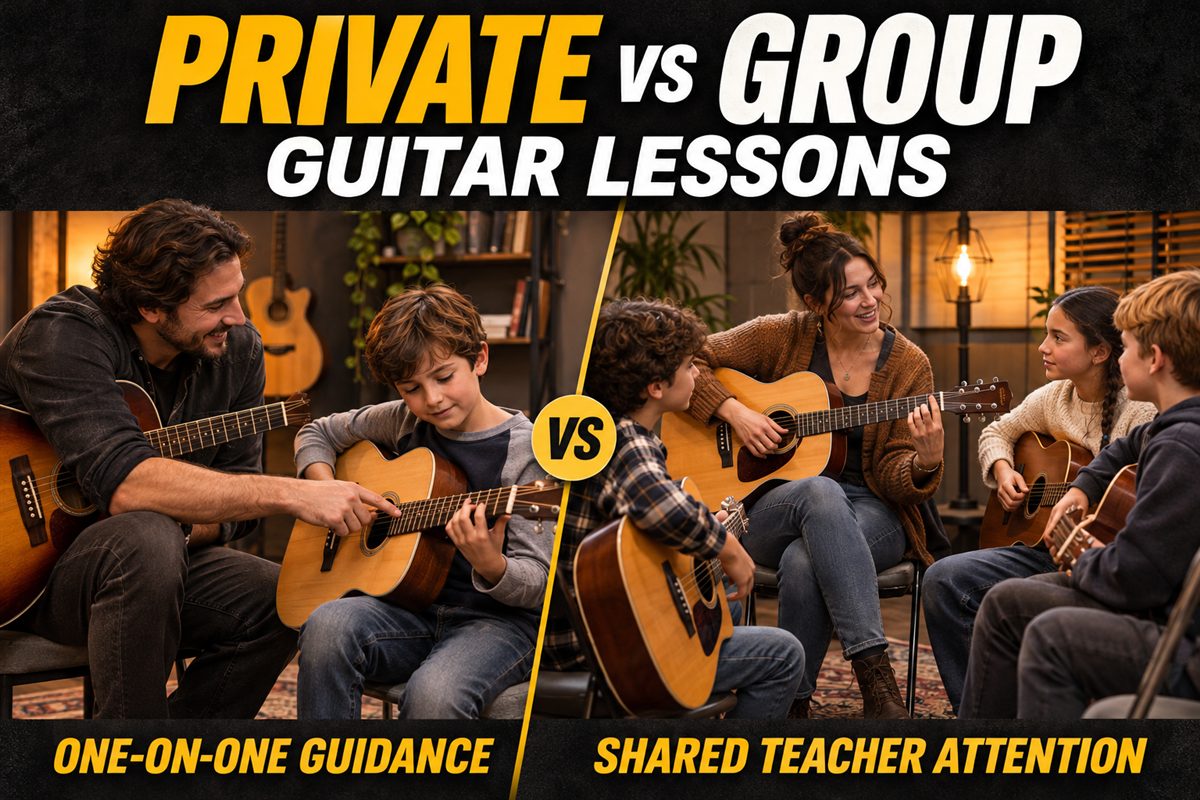
We strongly recommend private, one-on-one guitar lessons for learners of all ages, including adults. In our teaching experience, it's a far more effective format for learning the instrument because the teacher can focus on your technique, questions and progress. That individual guidance is especially critical for younger beginners, particularly children around ages 5–12.
Why adults benefit from one-on-one lessons too
Adult learners bring different goals, musical interests and experience. You might be picking up a guitar for the first time, returning after years away or working through a particular technique. In a private lesson, the teacher can focus on your starting point and the music you want to play, spending time where you need it rather than dividing attention across a class.
Group classes offer the chance to learn alongside other people. For developing your own skills, though, our recommendation is to make one-on-one instruction the foundation. Playing with others can complement that learning.
Young beginners need individual attention
Holding the guitar, pressing a string and keeping a simple rhythm can all be difficult at first. A young student may need the same instruction explained differently, demonstrated again and practised with the teacher beside them.
Even with one-on-one teaching, getting through those early challenges takes patience. Enjoyment often grows once children develop enough skill to hear their progress. Individual attention helps the teacher work through the obstacles along the way.
What 20 years of teaching have shown me
Over my 20 years of teaching, I've heard from parents whose children attended group classes for several months but still struggled to play independently. Some described learning only one song in that time. They came to us looking for more individual help with the instrument.
Those experiences reinforce why I consider individual guidance especially critical for younger beginners. My priority is giving each child the attention they need to build a foundation, rather than asking them to keep up with a class.
What about two children sharing a lesson?
Parents sometimes ask about sharing a lesson to save money. I strongly advise against it for young beginners.
In the shared lessons I've taught, students develop at different speeds. The lesson tends to shift towards the child who needs more help, while the other waits. Alternatively, the teacher switches between separate tasks for each student, dividing the individual attention each receives.
That makes a shared lesson a poor substitute for each child's own teaching time. A lower price per child doesn't necessarily mean better value for their learning.
Playing together has a different purpose
Playing with others can give students of any age a chance to listen, keep time and share their music. It serves a different purpose from developing your skills with a teacher's full attention. Our live and virtual performances give students opportunities to share what they've been working on.
Our approach at Go Guitar Lessons
We focus on private in-home guitar lessons across Ottawa and online lessons for children, teens and adults. We don't currently offer group classes. Teachers use small riffs, familiar songs and practical exercises to build skills at the student's pace.
One-on-one lessons still need consistent practice between sessions. Adults can build a manageable routine around the teacher's guidance; parents help younger learners establish that habit. Read about your child's first eight guitar lessons for more on those early stages.
View lessons and pricing, or request a trial lesson. Tell us the student's age, experience and preferred schedule so we can discuss a suitable teacher and availability.